
In the race to electrify Africa’s transport sector, the most critical innovation isn’t the lithium-ion battery; it is the spreadsheet.
While the global North debates range anxiety and charging speeds, African nations are cracking a far more difficult code: affordability.1 With the upfront cost of electric vehicles (EVs) often double that of internal combustion engine (ICE) equivalents, the continent has become a global laboratory for innovative financing models that decouple ownership from the asset’s most expensive component—the battery.
This investigation highlights the countries and companies turning "financial engineering" into the primary driver of EV adoption.
1. Kenya: The "Pay-As-You-Drive" Laboratory2
Kenya has emerged as the continent’s undisputed leader in commercial EV financing, driven not by traditional banks, but by asset-financing fintechs.
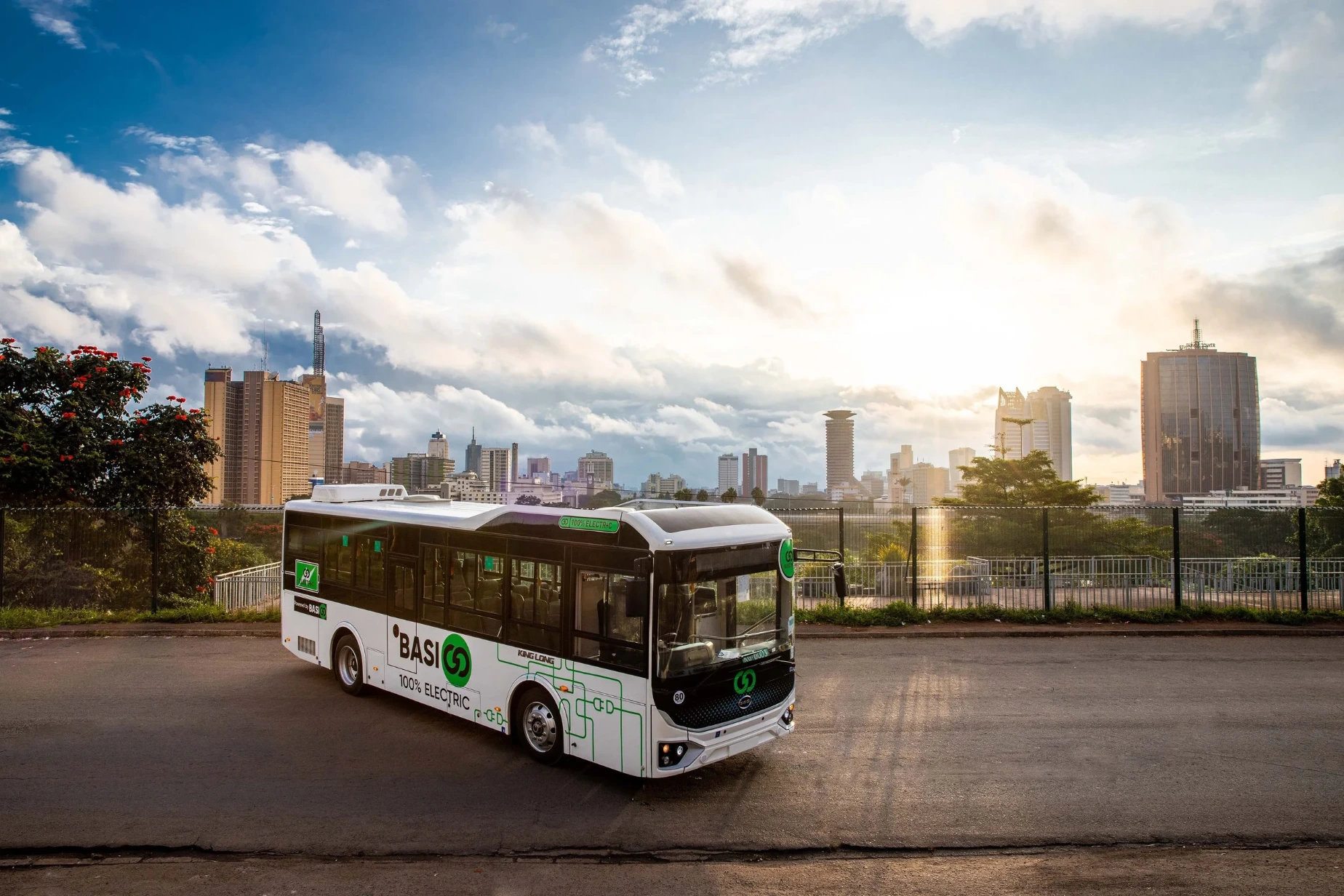 Image by BasiGo
The Model: Pay-As-You-Drive (PAYD)
The star of this ecosystem is BasiGo, an electric bus company that effectively operates as a bank. Their "Pay-As-You-Drive" model allows public transport operators (Matatu owners) to purchase an electric bus for the same upfront cost as a diesel equivalent.
How it works: The operator pays a deposit, but BasiGo retains ownership of the battery. The operator then pays a daily subscription fee based on kilometers driven (charged via mobile money).
The Insight: This shifts the risk of battery degradation from the buyer to the seller and converts a massive Capital Expenditure (CapEx) into a manageable Operating Expenditure (OpEx).
The Two-Wheeler Giants:
On the micro-mobility front, companies like Roam and financing partners like Watu Credit (originally famous for financing standard motorcycles) have pivoted aggressively to EVs. By leveraging telematics, they can remotely disable a vehicle if payments are missed, drastically lowering the collateral risk for lenders.
Key Stat: Startups like Spiro (operating across Kenya, Benin, Togo, and Rwanda) have deployed over 18,000 electric bikes, largely by removing the battery cost entirely from the purchase price.5
2. Ethiopia: The "Shock Therapy" Approach
While Kenya relies on market forces, Ethiopia has taken a radical, policy-led route that is forcing financial innovation out of necessity.
The Trigger:
In early 2024, Ethiopia became the first country in the world to ban the import of non-electric private vehicles. This "shock therapy" created immediate, desperate demand for EV financing in a market with low liquidity.
The Response:
New players like Utopia Technology have stepped into the vacuum with the "Utopia Green Fund."

The Model: Interest-free, long-term leasing (up to 10 years).
Why it matters: In a country with high inflation and a tightly controlled banking sector, offering interest-free repayment terms (likely structured to align with Islamic finance principles or simple lease-to-own) is the only way to make the mandatory switch affordable for the middle class.
3. Rwanda: The Policy-De-Risked Haven
Rwanda offers the most sophisticated regulatory financing environment. It isn’t just about the companies; it’s about the state de-risking the sector for investors.
The Strategy:
The Rwandan government introduced a comprehensive set of incentives that directly lower the cost of financing:
Zero-rated import duties on electric vehicles and hybrid cars.
Capped electricity tariffs for charging stations (classifying them as industrial clients), which stabilizes the "fuel" cost for financing models that bundle energy.
Rent-to-Own Innovation: Ampersand, a dominant player in Kigali, pioneered the battery-swap model where the driver buys the bike (often on credit) but rents the battery. This reduces the upfront cash requirement by nearly 50%, making the loan size small enough for micro-finance institutions (MFIs) to stomach.
Comparative Analysis: Financing Models by Country
| Country | Dominant Financing Model | Key Players | Success Factor |
| Kenya | Pay-As-You-Drive (PAYD) | BasiGo, Roam, Watu | High mobile money penetration (M-Pesa) allows for frictionless daily micropayments. |
| Rwanda | Battery-as-a-Service (BaaS) | Ampersand, Kabisa | Strong government subsidies and tax breaks reduce the principal loan amount. |
| Ethiopia | Regulatory Force / Lease | Utopia Tech, Belayneh Kindie | Import ban on gas cars forced immediate market shift to EV leasing. |
| South Africa | Traditional Auto Finance | WesBank, GridCars | Mature banking sector adapting traditional car loans for green assets; slower innovation but higher capital depth. |
The "Battery-as-Currency" Concept
The unifying theme across the top African markets is the treatment of the battery as a separate financial asset.
In the West, you buy the car, and the battery is inside it. In Africa’s leading models (Spiro, Ampersand, and BasiGo), the battery is a service.
Decoupling: The customer buys the metal and wheels.
Subscription: The energy company owns the battery.
Risk Mitigation: If the battery dies, it’s the company's problem, not the driver's. This removes the single biggest fear preventing banks from lending on EVs: asset depreciation.
Challenges Remaining
Despite the optimism, the "Finance First" model faces significant hurdles:
Currency Risk: Most EV assets are imported in USD/CNY, while revenues (loan repayments) are collected in local currency (KES, ETB, RWF). A devaluing local currency can wipe out a financing company's margins overnight.
Cost of Capital: Local interest rates in countries like Kenya and Nigeria can exceed 20-25%, making debt financing expensive for the startups themselves.
Africa is leapfrogging the traditional auto-loan model. Just as the continent skipped landlines for mobile phones, it is skipping the "buy-a-car" model for a "subscribe-to-mobility" future. The winners in this market won't just be the best engineers; they will be the companies that can best manage credit risk on a $2,000 battery for a rider earning $10 a day.