
The year is 2026, and the conversation in the business hubs of Lagos, Nairobi, and Cairo has shifted. It’s no longer just about what we are trading, but how freely the people behind the trade can move.
At the centre of this revolution is a single, navy-blue document: the African Union (AU) Passport. It is being hailed as the "$3.4 Trillion Passport", not because of its cost, but because it is the master key to a unified African economy with a combined GDP of that staggering magnitude.
This is the story of how a travel document becomes the most powerful economic tool on the continent.
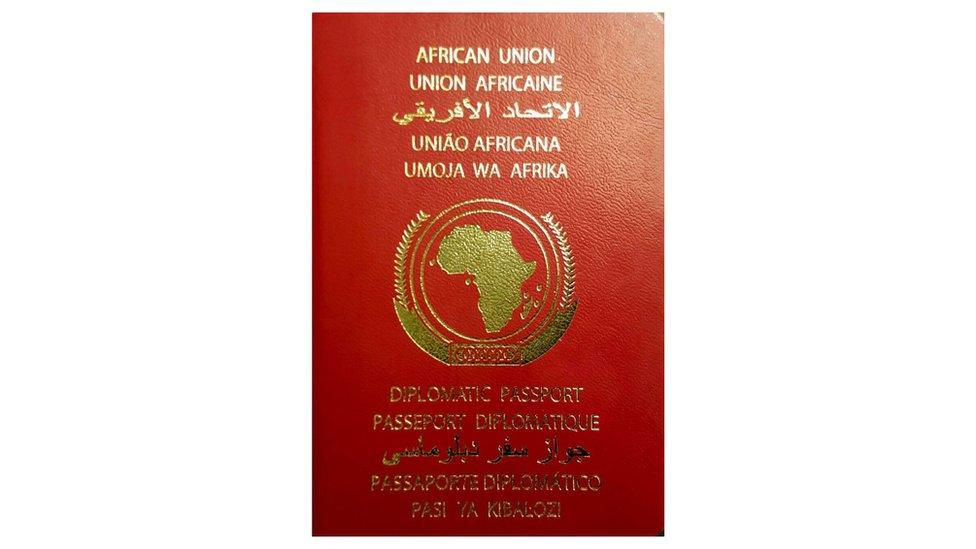
More Than a Document: An Economic Engine
The phrase "$3.4 Trillion Passport" isn't just hyperbole. It represents the total economic weight of 1.3 billion people finally operating as a single market under the African Continental Free Trade Area (AfCFTA).
For decades, African borders have acted as speed bumps for progress. Intra-African trade has historically hovered around 15-18%, a fraction of Europe’s 70%.
The reason? You cannot have a seamless flow of goods if the people moving them are trapped behind a wall of visa fees, embassy interviews, and bureaucratic delays.
The $3.4 Trillion Passport implies:
The Death of the "Visa Tax": Eliminating the millions of dollars lost annually by businesses in visa processing fees and lost time.
Labor Fluidity: Allowing a solar engineer from Zimbabwe to work in a Senegalese tech hub as easily as moving between cities.
Tourism Sovereignty: Enabling the African middle class to spend their travel budgets within the continent, keeping wealth circulating locally.
The Journey Since 2016: From Diplomats to Citizens
The dream was officially ignited in 2016 in Kigali, Rwanda, when the AU issued the first passports to heads of state and diplomats. It was a symbolic "opening of the gates."
However, the road to a general rollout for all 1.3 billion citizens has been a steep climb. As we navigate late 2025 and 2026, the continent is tackling two major hurdles:
The Biometric Gap: Creating a unified, high-tech digital identity system that all 55 member states can trust.
The Security Paradox: Balancing the desire for open borders with the need to track and prevent cross-border crime and insurgency.
The Pioneers Leading the Charge
While the continental rollout continues to evolve, a "Coalition of the Willing" has stopped waiting for a perfect consensus. Countries like Rwanda, Kenya, Seychelles, The Gambia, and Benin have already moved to unilateral visa-free travel for all African citizens.
These pioneers are proving the thesis: when you open your borders to Africa, your economy doesn't just grow, it transforms. They are the first to experience the "AfCFTA dividend," attracting entrepreneurs and investors who prioritize ease of movement.
The Final Frontier: A Passport to Dignity
Ultimately, the $3.4 Trillion Passport is the final rejection of a world where an African's mobility is determined by colonial-era borders. It is the fulfillment of Agenda 2063, turning the "United States of Africa" from a Pan-African poem into a practical, profitable reality.
When an African trader can slide their AU Passport across a counter in a neighboring country without fear or fee, the continent isn't just travelling; it is finally arriving at its full potential.