
The recent announcement by Meta (formerly Facebook) that the 2Africa subsea cable system has completed its initial deployment is far more than a technical achievement; it signals a pivotal moment for Africa's digital future. Spanning an astonishing 45,000 kilometers, this open-access infrastructure is now the world's longest subsea cable, poised to fundamentally reshape the continent's connectivity landscape.
What Does the 2Africa Cable Story Truly Mean?
At its core, the 2Africa cable represents democratized, high-capacity internet access for Africa on an unprecedented scale. Here's a deeper dive into its profound implications:
- Bridging the Digital Divide: For too long, much of Africa has suffered from limited and expensive internet access, hindering economic growth and social development. The 2Africa cable is designed to dramatically increase capacity, bringing faster, more reliable, and ultimately more affordable internet to hundreds of millions. It's about connecting the unconnected, transforming potential into palpable progress.
- Fueling Local Innovation and Digital Economies: Reliable, high-speed internet is the bedrock of modern digital economies. With enhanced connectivity, African startups in fintech, ed-tech, e-health, and e-commerce can innovate faster, scale more easily, and compete globally. This means more local solutions to local problems, creating jobs and fostering an ecosystem of digital entrepreneurship.
Strengthening Data Sovereignty and Resilience: By routing data directly around the continent and connecting to Europe and Asia, the 2Africa cable provides crucial redundancy and reduces reliance on a few single points of failure. This improved resilience is vital for national security and economic stability. Furthermore, by keeping African data flowing more directly within and around the continent, it subtly strengthens arguments for data sovereignty, allowing African nations greater control over their digital infrastructure.
Attracting Foreign Direct Investment: The presence of robust digital infrastructure is a magnet for international investment. Companies looking to expand into Africa, especially in tech-heavy sectors, will find a more appealing environment with high-capacity, low-latency internet. This can lead to increased foreign direct investment (FDI), technology transfer, and further economic integration into the global digital economy.
Transforming Daily Lives: Beyond economic figures, the cable promises tangible improvements in daily life. Access to online education, telemedicine services, digital banking, and even basic communication will be revolutionized for countless individuals, particularly in underserved regions. It's about empowering communities with information and opportunities previously out of reach.
Which Countries Have Profited So Far (and will continue to)?
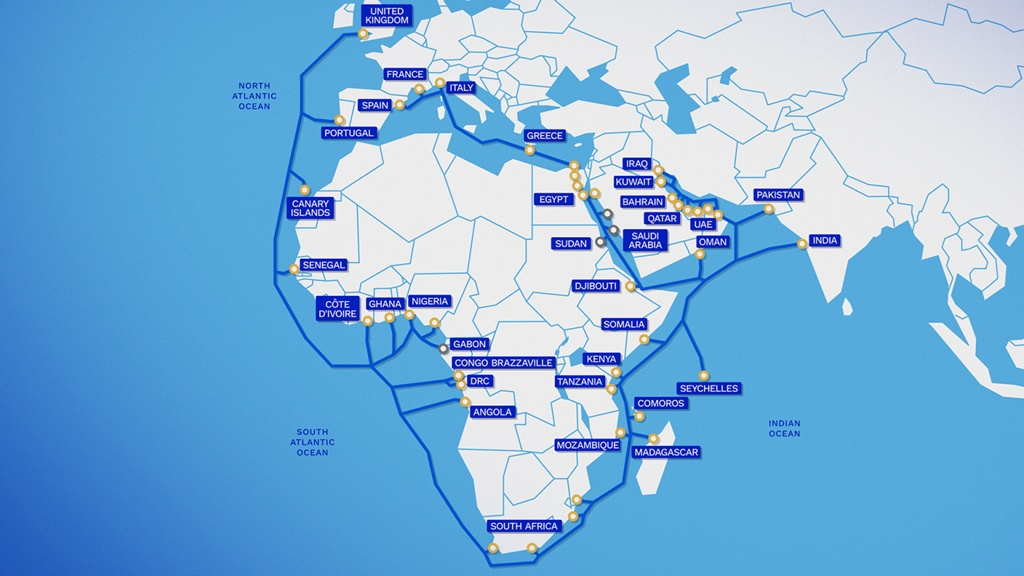
The 2Africa cable is strategically designed to land in 33 countries across Africa, touching nearly every coastal nation and providing backhaul connectivity to landlocked countries. Its "open access" model is key, allowing any licensed service provider to use its capacity, fostering competition and broader reach.
While the full economic impact will unfold over years, countries with the earliest and most robust landing points, coupled with proactive national digital strategies, stand to gain the most immediately.
Early and Significant Beneficiaries Include (but are not limited to):
South Africa: As a major economic hub and a significant content consumer/producer, South Africa's multiple landing points (e.g., in Yzerfontein and Duynefontein) position it as a critical gateway for data flowing into and out of the southern African region. Its already mature digital economy will only accelerate.
Nigeria: With the largest population and a burgeoning tech scene (often referred to as 'Africa's Silicon Valley' due to Lagos's startup ecosystem), Nigeria's connectivity will be massively boosted. The cable directly feeds its enormous market potential, driving further digital adoption and innovation.
Kenya: A leader in mobile money (M-Pesa) and a significant East African tech hub, Kenya's improved connectivity will further solidify its position. The cable enhances its role as a regional data exchange point, supporting its vibrant startup culture.
Egypt: Bridging Africa, the Middle East, and Europe, Egypt's strategic location and existing digital infrastructure make it a crucial node for the 2Africa cable. It stands to benefit significantly from increased traffic and its role as a regional internet gateway.
Democratic Republic of Congo (DRC): Historically underserved, the DRC's connectivity will see a dramatic leap, unlocking immense potential in a country rich in resources and population. This could be a game-changer for digital development in Central Africa.
Ghana, Senegal, and Côte d'Ivoire: These West African nations, with growing economies and digital ambitions, will experience substantial improvements in internet quality and cost, supporting their respective pushes for digital transformation and regional integration.
The "profit" here isn't solely financial; it's also measured in social capital, human development, and economic resilience. The 2Africa cable isn't just laying fibre; it's laying the foundation for Africa's accelerated and integrated future in the global digital age. As the cable lights up more landing points, the true scope of this transformative project will become increasingly clear, echoing through every aspect of African life.