
In the wake of the 2025 Aid Shock that saw traditional assistance models falter, a new blueprint for international cooperation has emerged. The European Commission’s adoption of the Horizon Europe Work Programme 2026-2027, unveiled on December 12, 2025, represents a pivotal shift from "aid" to intellectual equity.
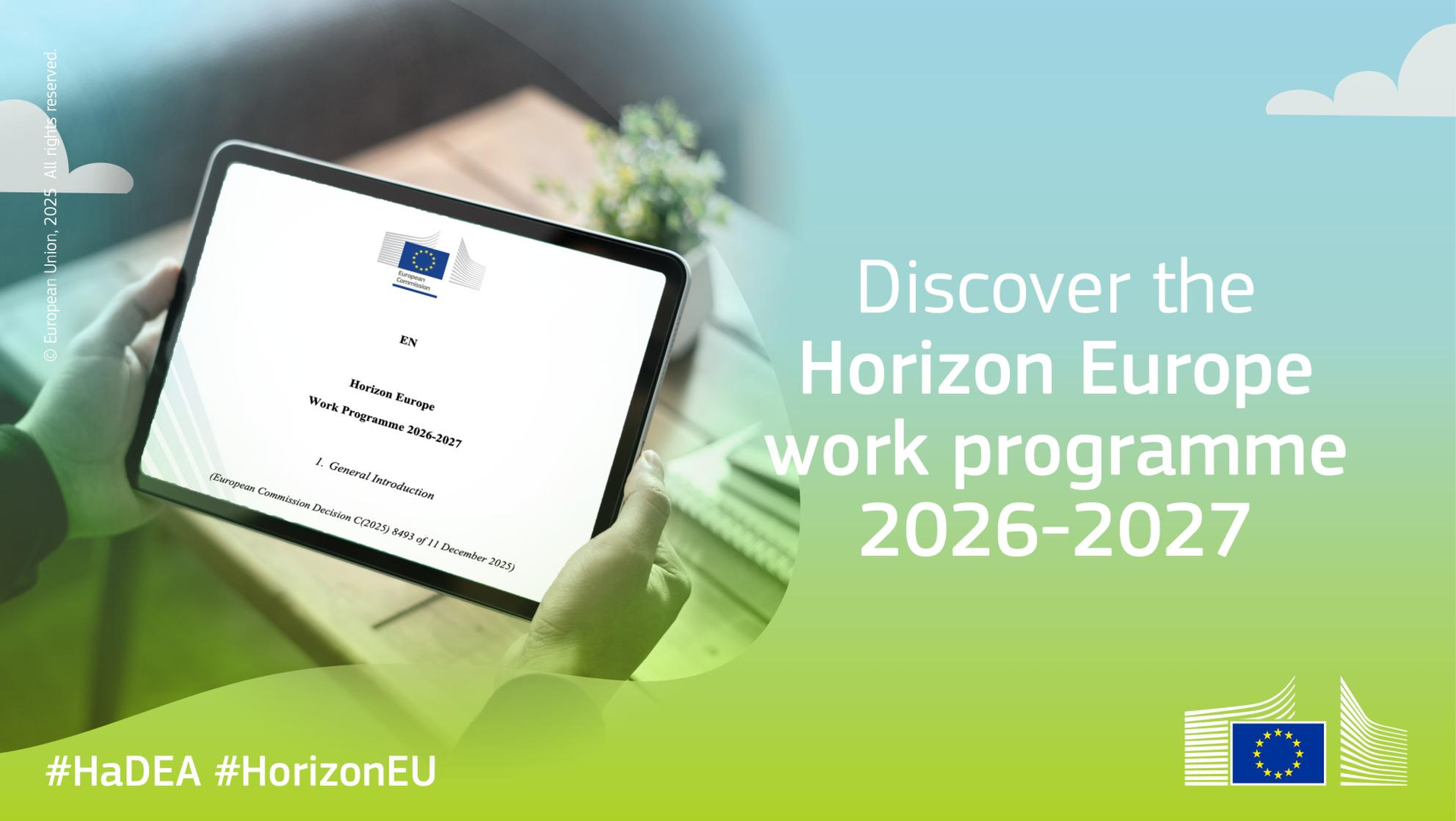
The HaDEA (European Health and Digital Executive Agency) announcement makes clear the future is being built on Clusters 1 (Health) and 4 (Digital, Industry, and Space). For Africa, this isn't just a research budget; it is an invitation to co-author the next era of global technology.
While the programme allocates €14 billion to drive EU strategic goals, its significance for Africa lies in a fundamental reimagining of the Afro-European relationship. Here is an insightful look at what this means for the continent.
1. Health Preparedness: From Patient to Producer
The 2026-2027 Work Programme places "Health Preparedness" at its core. Following the 2025 shocks to global health funding, the EU is pivoting toward building resilient healthcare ecosystems.
The African Angle: Rather than merely shipping vaccines to African ports, the focus is shifting toward collaborative medical research. By integrating African scientists into Horizon Europe’s multi-billion euro health cluster, the programme supports the AU’s goal of manufacturing 60% of the continent's vaccine needs by 2040. This is the transition from Africa as a "clinical trial site" to Africa as a "biotech hub."

2. The Digital "Leapfrog" and Raw Materials
Cluster 4 (Digital, Industry, and Space) focuses heavily on raw materials and digital transformation.
Strategic Autonomy: The EU’s hunger for green-transition minerals (lithium, cobalt, and rare earths) is a central theme. For Africa, the significance lies in the value-add clause. Unlike old-school extraction, the 2026-2027 framework emphasizes industrial research and innovation at the source.
Digital Infrastructure: By involving African tech hubs in EU-funded industrial research, the programme helps bridge the digital divide, treating African digital infrastructure as an extension of the global digital market rather than an isolated outpost.
3. Science Diplomacy as the New Foreign Policy
The 2025 aid shock proved that financial aid is volatile, subject to the whims of donor-country elections. In contrast, Horizon Europe’s 2026-2027 programme creates institutional "stickiness". When an African university or startup is woven into a Horizon Europe consortium, they aren't just receiving a grant; they are gaining access to European markets, standards, and high-level intellectual networks. This "science diplomacy" is far more resilient than traditional aid because it is based on mutual benefit: Europe gets the talent and resources it needs, and Africa gets the technology and infrastructure it lacks.

4. The "Brain Gain" Opportunity
A major criticism of past programs was the "brain drain", African scientists leaving for Europe. The 2026-2027 programme’s emphasis on "EU Missions" (large-scale projects addressing global challenges) encourages circularity. By funding projects that tackle problems specific to the African context, such as tropical disease management or climate-smart agriculture within the Horizon framework, the EU is providing the financial incentive for Africa’s brightest minds to stay and innovate at home while remaining globally connected.
5. The Geopolitical Buffer
As the U.S. retreats from many multilateral development platforms, the EU is using Horizon Europe to stake its claim as Africa’s "partner of choice". This programme acts as a buffer against the 2025 aid vacuum, offering a sophisticated alternative to the debt-heavy models often associated with other global powers.
The Insight: A New Currency of Cooperation
The significance of the 2026-2027 Horizon Europe Work Programme for Africa is that it changes the currency of the relationship. In the old world, the currency was charity. In this new framework, the currency is knowledge.
For African governments, the challenge now shifts from "How do we get more aid?" to "How do we position our universities and industries to win these competitive bids?" It is a more demanding relationship, but one that offers something aid never could: a seat at the table of global innovation.
The Bottom Line: If the 2025 aid shock was the end of the "Post-Colonial Aid Era", the Horizon Europe 2026-2027 programme may well be the beginning of the "Afro-European Innovation Era. " Africa is no longer just a beneficiary of the world’s problems; through this programme, it is being funded to become a co-creator of the world's solutions.